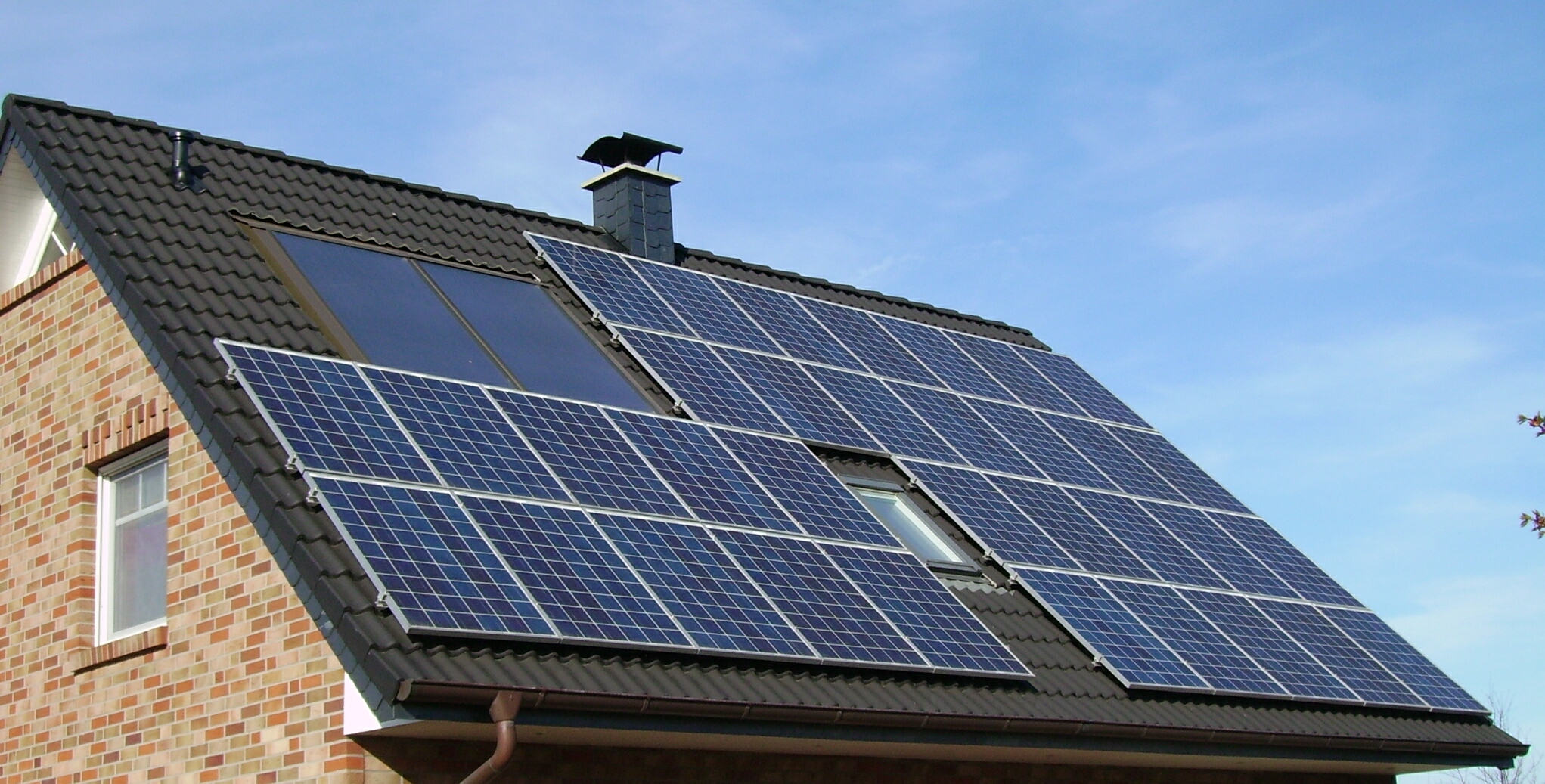
Czech residential energy regulation sits at the intersection of national legislation, EU directives, and municipal building codes. For homeowners considering photovoltaic installations or wider energy efficiency upgrades, the regulatory landscape involves several overlapping frameworks: the Energy Management Act, building permit requirements, the PENB energy performance certificate, and two main subsidy programmes. Understanding how these fit together reduces the risk of procedural delays and improves the likelihood of securing available financial support.
The Energy Management Act (Zákon o hospodaření energií)
Act No. 406/2000 Coll. on Energy Management (as amended) forms the primary legislative basis for energy efficiency obligations in the Czech Republic. It transposes the EU Energy Performance of Buildings Directive (EPBD) and the Energy Efficiency Directive into Czech national law. The act covers:
- Mandatory energy performance certificates (PENB) for buildings subject to sale, rental, or major renovation
- Energy audit requirements for large non-residential consumers
- Obligations on state buildings to meet specific energy performance targets
- Rules for the installation and connection of on-site generation, including photovoltaics
For most homeowners, the most relevant provisions relate to the PENB certificate and, where applicable, the permitting process for rooftop PV installations. The act has been subject to several amendments, with a significant update in 2024 aligning Czech law with the revised EPBD (2024/1275/EU).
PENB: Energy Performance Certificate
The Průkaz energetické náročnosti budovy (PENB) classifies a building on a scale from A (extremely efficient) to G (very inefficient), based on calculated annual primary energy consumption per square metre. The Czech methodology for PENB calculation is defined in decree No. 264/2020 Coll., which superseded the previous 78/2013 framework.
When is a PENB required?
A PENB is mandatory when a residential building is sold or rented, when a new building is constructed, when a major renovation (affecting more than 25% of the building envelope) is carried out, and when applying for certain subsidies. For a PV installation that does not involve changes to the building envelope, a new PENB is typically not required — the existing certificate remains valid. However, if the PV installation is part of a broader renovation package funded through NZÚ, the updated energy performance after renovation is calculated as part of the grant documentation.
Impact of PV on PENB rating
A photovoltaic system reduces the net primary energy consumption figure used in the PENB calculation by crediting on-site generated electricity. The exact credit depends on the primary energy conversion factor for electricity (currently 3.0 in the Czech methodology), meaning 1 kWh of generated solar electricity offsets 3 kWh of primary energy in the PENB calculation. This can meaningfully shift a building from class C to class B, which has implications for property value assessment and future sale.
Building Permits for Photovoltaic Installations
The permitting requirements for a residential rooftop PV system in the Czech Republic depend on system size and building type.
Simplified notification (ohlášení)
Under the 2024 amendments to the Building Act (No. 283/2021 Coll., effective from 1 July 2024), rooftop PV systems on family houses (rodinné domy) up to 20 kWp that do not alter the building's appearance significantly are subject to a simplified notification procedure (ohlášení) rather than a full building permit. The notification is submitted to the relevant municipal building authority (stavební úřad) and includes technical documentation of the system.
Full building permit
Systems above 20 kWp on residential buildings, or installations on listed buildings (kulturní památky) or buildings in heritage protection zones (památkové rezervace), require a full building permit. The heritage protection authority (NPÚ or local municipal authority) must also issue a prior binding opinion in heritage-sensitive cases.
Grid connection procedure
Separately from the building permit, grid connection for a PV system is governed by Energy Act No. 458/2000 Coll. and the grid code issued by ERU (Czech Energy Regulatory Office). The process involves:
- Reservation request (žádost o rezervaci kapacity) submitted to the relevant DSO
- Technical connection agreement (smlouva o připojení)
- Commissioning inspection by a certified electrician (revize)
- Notification of first generation to the DSO and the electricity market operator (OTE)
The DSO has a statutory 30-day response period for small installations (up to 10 kWp) and 90 days for larger systems. In practice, processing times have extended in some distribution areas due to the volume of applications since 2022.

Subsidy Frameworks
Nová zelená úsporám (NZÚ)
NZÚ (New Green Savings) is administered by the State Environmental Fund (SFŽP) under the Ministry of the Environment. It is the primary subsidy route for residential energy efficiency measures including insulation, heat pumps, and photovoltaic systems with battery storage.
For the 2024–2026 period, the PV-specific call (výzva) within NZÚ supports:
- PV systems combined with battery storage on family houses
- Grant rate: up to 50% of eligible costs, with caps per kilowatt-peak and per kilowatt-hour of storage
- Minimum system size: 2 kWp
- Installer must be registered on the approved contractor list (seznam doporučených dodavatelů)
The full conditions, including current per-unit caps, are published at novazelenausoram.cz. Conditions change between calls, and the figures above should be verified against the current call documentation before making financial decisions.
OP TAK (Operational Programme Technology and Applications for Competitiveness)
OP TAK is primarily directed at business entities and municipalities rather than individual homeowners. However, owners of apartment buildings (bytové domy) operating under a homeowners' association (SVJ) structure can access OP TAK funding for communal PV systems and shared energy storage. The relevant programme activity is administered by the Czech-Moravian Guarantee and Development Bank (ČMZRB).
Electricity Self-Consumption Rules
Czech energy law permits registered prosumers (výrobce-odběratel) to consume their own generated electricity and to share it within a community energy group (energetické společenství) under Act No. 458/2000 Coll. as amended by the community energy transposition (directive 2018/2001/EU, RED II). The community energy framework, introduced in Czech law via Act No. 221/2023 Coll., allows groups of up to 1 000 members to share generation from a single or multiple sources registered under one operator. For a residential building complex or a small village cooperative, this is a relevant framework for shared rooftop PV beyond the individual household level.
Regulatory conditions for photovoltaic installations and subsidies in the Czech Republic are subject to change. The information above reflects the legal framework as of May 2026. Always verify current requirements with the relevant authority or a qualified legal and technical adviser before proceeding.
Practical Sequence for a Residential PV Installation
- Obtain a technical assessment from a certified installer (projek tová dokumentace)
- Confirm whether simplified notification or full building permit is required with the local stavební úřad
- Submit the reservation request to the DSO and await the technical connection agreement
- File the NZÚ grant application before starting construction (applications must typically precede works)
- Complete installation and obtain the electrical inspection certificate (revize)
- Notify the DSO and OTE of first generation; sign the grid operator agreement
- Submit the NZÚ completion documentation and receive the grant payment
Steps 2 and 3 can often be run in parallel. Step 4 is critical — NZÚ does not retrospectively fund installations completed before the application was filed. See also our articles on panel selection and battery storage options.

